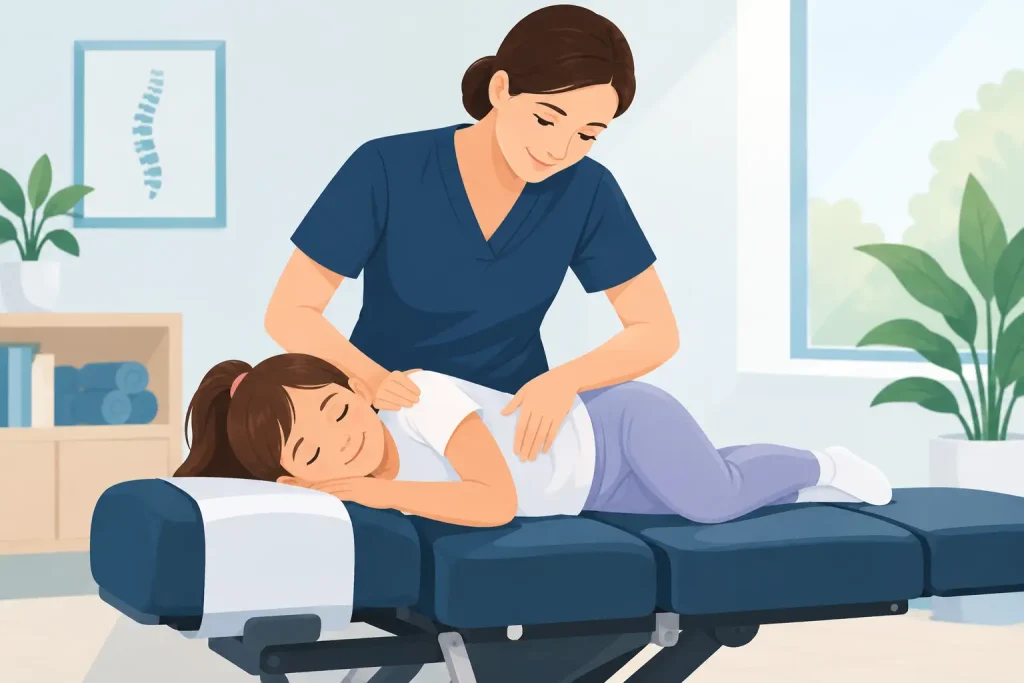


A child’s body is always in motion. From the first days of tummy time to the tumbles, growth spurts, backpacks, sports, and long car rides that come later, their spine supports nearly every new skill they learn. This guide to pediatric spinal health is designed to help parents recognize what healthy movement can look like, build supportive everyday habits, and understand when a gentle, individualized evaluation may be worthwhile.
Children are resilient, but resilience does not mean their bodies never need support. A child may not describe discomfort the way an adult would. Instead, parents may notice changes in posture, sleep, coordination, mood, or willingness to participate in favorite activities. Paying attention early is not about looking for problems. It is about giving your child every opportunity to move, grow, and feel at ease in their body.
What Pediatric Spinal Health Really Means
Pediatric spinal health is bigger than having a straight posture or avoiding back pain. It is about how well a child’s body moves, adapts, and communicates as they grow. The spine protects the nervous system, supports the head and trunk, and helps children turn, bend, balance, crawl, walk, run, and rest comfortably.
Every child develops at their own pace. Some are naturally flexible, some are more cautious movers, and some go through phases where growth changes their coordination almost overnight. Healthy development does not look identical from one child to the next. What matters most is whether your child appears comfortable, capable, and generally symmetrical in their movement.
A whole-body perspective also matters. The way a child holds their head can affect how they use their shoulders. The way they sit may reflect tiredness, vision needs, muscle strength, or simply a preference for a certain position. Rather than focusing on one isolated body part, it helps to observe patterns over time.
The Everyday Experiences That Shape Growing Bodies
Childhood is full of normal physical stressors. Birth can be physically demanding. Infants spend time in car seats, swings, carriers, and on the floor learning to move against gravity. Toddlers fall frequently as they build confidence. School-age children sit for longer periods, carry backpacks, and may specialize in a sport before their bodies have fully matured.
None of these experiences automatically creates a spinal concern. They are simply part of the context a thoughtful provider considers when evaluating a child. A minor bump, a sudden growth spurt, or repetitive activity can sometimes change the way a child moves or compensates, especially if there was already tension or imbalance in the body.
Screen time is another practical consideration. Looking down at a tablet or phone for extended periods can encourage a forward-head posture, while long stretches of sitting reduce opportunities to climb, twist, balance, and use the body in varied ways. The answer is not perfection or eliminating technology. It is creating rhythm: periods of sitting balanced with outdoor play, floor time, movement breaks, and restful sleep.
Signs Your Child May Benefit From a Conversation
Most children do not need parents to analyze every movement. Still, certain recurring patterns deserve a closer look with your child’s pediatrician or a qualified pediatric provider. Consider asking for guidance if you notice persistent discomfort, reluctance to turn the head in both directions, frequent complaints of headaches or neck or back pain, a noticeable change in posture, uneven shoulder height, limping, or a change in coordination.
For babies, parents may notice a consistent preference for looking to one side, difficulty settling in certain positions, challenges with feeding comfort, or an asymmetrical head shape. These observations do not point to one single cause, and they should not be self-diagnosed. They are useful details to share at a pediatric visit.
Older children may show concern differently. They might avoid a sport they usually love, seem unusually sore after ordinary activity, ask to be picked up more often, wake from discomfort, or become irritable during car rides and homework. Children can also adopt slouched or uneven positions when they are tired, so the key is consistency. A pattern that persists or worsens is more meaningful than a single off day.
When Medical Care Should Come First
Some symptoms need prompt medical assessment rather than a wellness-focused appointment. Seek urgent care for significant trauma, severe or worsening pain, weakness, numbness, loss of bowel or bladder control, unexplained fever with back pain, difficulty walking, or pain that repeatedly wakes a child from sleep. Sudden changes after a fall, collision, or sports injury should also be evaluated appropriately.
Pediatric chiropractic care is not a replacement for pediatric medical care, emergency care, imaging when medically indicated, or treatment from a specialist. A responsible care plan begins with listening carefully, reviewing health history, and referring out when a child’s symptoms call for another level of assessment.
Supporting Spinal Health at Home
The most powerful support for a growing spine is usually not complicated. It comes from regular movement, enough rest, and an environment that lets children use their bodies in many different ways.
For infants, supervised tummy time while awake can help build the neck, shoulder, and trunk strength needed for later milestones. Change positions throughout the day when possible instead of relying on one container or seat for long periods. If your baby consistently favors one side or seems uncomfortable, bring it up with their pediatrician sooner rather than later.
For school-age children, encourage active play that includes climbing, running, hanging, balancing, and carrying light objects. Variety is valuable because it asks the body to adapt in multiple directions. A child who loves one sport does not need to quit it, but cross-training and unstructured play can help balance repetitive patterns.
Backpacks deserve a quick check, especially during the school year. A well-fitting pack should rest close to the body, use both shoulder straps, and avoid carrying more than necessary. If a backpack is consistently heavy or pulling a child backward, reorganizing it or choosing a better-fitting style can make a meaningful difference.
Sleep also gives the body time to recover. There is no single perfect mattress or pillow for every child, but the goal is simple: a comfortable sleep setup that allows the neck and body to rest in a natural position. If your child wakes stiff, complains of discomfort, or regularly sleeps in unusual positions to get comfortable, mention it during a healthcare visit.
What a Gentle Pediatric Chiropractic Visit May Include
Parents often wonder what makes pediatric chiropractic different from adult care. A child-centered visit should be calm, thorough, and age-appropriate. It starts with a conversation about pregnancy and birth history when relevant, developmental milestones, activity levels, injuries, health history, and the specific changes a parent has observed.
The physical assessment should be gentle and adapted to the child’s age, size, comfort, and ability to participate. For infants, that may involve observing head movement, body position, and muscle tension while they are held or resting. For older children, it may include looking at posture, range of motion, balance, and how they move through simple activities.
At Alchemy Chiropractic, care is grounded in the belief that the body functions best when it is supported as a connected whole. Gentle, specific chiropractic care can be considered as part of a family’s broader wellness plan when it is appropriate for the child and coordinated with their pediatric healthcare needs. Parents should feel welcome to ask what the provider is assessing, why a recommendation is being made, what alternatives exist, and what progress would look like.
A good provider will never pressure a parent into a long care plan without clear reasoning. Recommendations should reflect the child in front of them, not a one-size-fits-all schedule. Sometimes the next best step is chiropractic support. Sometimes it is a pediatrician, physical therapist, dentist, vision specialist, or simply time, movement, and observation.
A Parent’s Guide to Pediatric Spinal Health Starts With Trust
Parents know their children better than anyone. You notice the small shifts: the child who suddenly avoids looking over one shoulder, the athlete who is not moving with their usual confidence, or the toddler who seems uncomfortable in the car seat every day. Those observations are valuable.
At the same time, pediatric spinal health is not about chasing flawless posture or treating every ordinary growing pain. It is about responding thoughtfully when something feels off, supporting healthy movement at home, and choosing providers who listen carefully and respect the full picture of your child’s health.
When children feel comfortable and confident in their bodies, they are freer to play, learn, rest, and grow into who they are becoming. That is a meaningful place to begin.