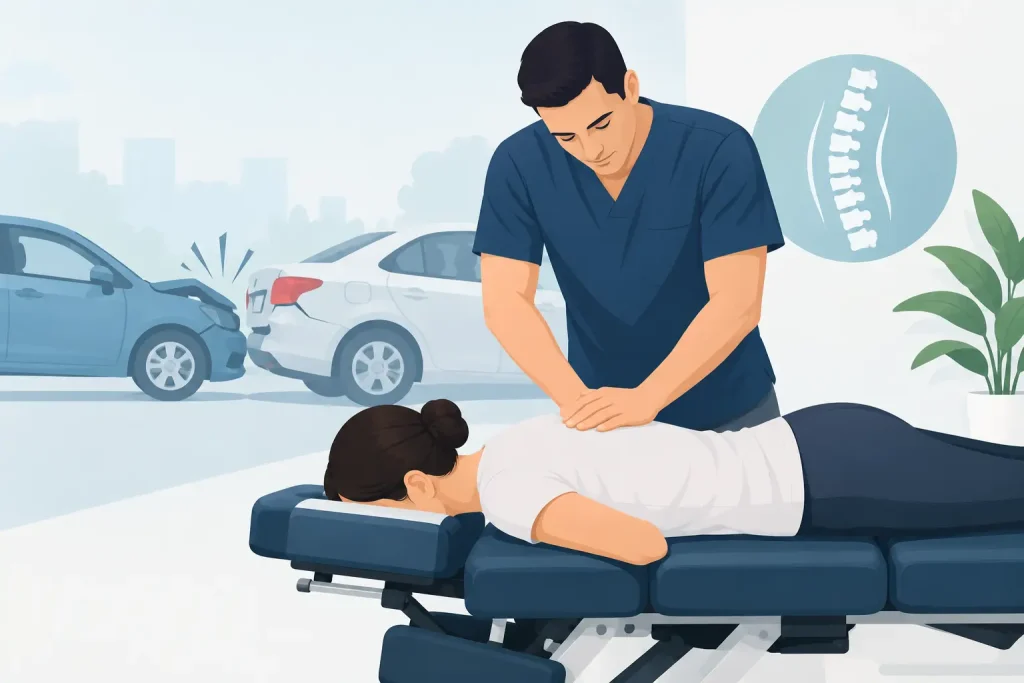


A crash can be over in seconds, yet your body may still be processing it days later. The best questions after auto accident injuries are not only about the damage to your car. They help you notice changes in pain, movement, energy, sleep, and overall well-being before a small issue has time to become a lasting disruption.
It is common to feel shaken, stiff, or surprisingly fine at first. Adrenaline can temporarily mask discomfort, especially after a rear-end collision or low-speed impact. Asking thoughtful questions early creates a clearer path toward appropriate care, documentation, and a more supported recovery.
First, ask: Do I need urgent medical attention?
Before focusing on soreness or insurance paperwork, assess for signs that need immediate medical evaluation. Call 911 or seek emergency care for severe or worsening headache, loss of consciousness, confusion, trouble speaking, chest pain, difficulty breathing, significant abdominal pain, weakness or numbness, repeated vomiting, seizures, or uncontrolled bleeding.
If you are unsure, it is better to be checked. A calm approach to healing includes knowing when a concern falls outside the scope of routine chiropractic care and needs urgent medical attention.
12 best questions after auto accident injuries
1. What symptoms am I feeling right now?
Pause and take an honest inventory. Notice neck or back pain, headaches, jaw tension, shoulder discomfort, dizziness, nausea, tingling, fatigue, sensitivity to light, or changes in concentration. Do not limit your attention to the place that took the direct impact. The body often compensates after a collision, and discomfort can show up in connected areas.
Write down what you feel, when it began, and how intense it is. This gives your healthcare providers a more complete picture than simply saying, “I’m sore.”
2. Did the pain begin later or change over time?
Many people expect injuries to hurt immediately. In reality, stiffness and inflammation may become more noticeable after the first day or two, once the body settles out of its initial stress response. A headache that appears the next morning, a neck that grows tighter through the workday, or low back pain that makes sleep difficult all deserve attention.
Track whether symptoms are improving, holding steady, or worsening. Delayed symptoms are still real symptoms, and they are worth discussing with a qualified provider.
3. What movements feel different than usual?
Try to notice function, not just pain. Can you turn your head comfortably while backing out of a parking space? Is it harder to sit at your desk, pick up your child, climb stairs, exercise, or get restful sleep? Do everyday movements feel guarded or restricted?
Changes in mobility can reveal how an accident has affected muscles, joints, and the nervous system. They also provide useful benchmarks as healing progresses.
4. Could stress be affecting how my body feels?
An auto accident can be physically and emotionally jarring. You may feel tense behind the wheel, have trouble sleeping, feel more irritable, or notice your shoulders are constantly drawn upward. Stress does not mean your physical symptoms are “all in your head.” It can amplify muscle tension, interrupt rest, and make recovery feel more difficult.
Share these changes with your provider. Whole-body healing considers how physical strain and emotional stress can influence one another.
5. Should I get evaluated even if the accident seemed minor?
Often, yes. The force of a collision does not always match the visible damage to a vehicle, and a low-speed accident can still leave someone with meaningful stiffness, pain, or mobility changes. An evaluation can help determine whether your symptoms need medical care, imaging, conservative treatment, or close monitoring.
The right next step depends on your symptoms, health history, the type of collision, and how you are functioning. Early evaluation is not about assuming the worst. It is about giving your body the attention it deserves.
6. What should I tell my provider about the crash?
Be specific. Explain when the accident happened, where your vehicle was struck, whether you were wearing a seatbelt, whether airbags deployed, and whether you hit your head or lost consciousness. Mention your position in the vehicle, the direction your body moved, and symptoms that began immediately or later.
Also share relevant health history, including prior injuries, migraines, surgeries, chronic conditions, medications, and pregnancy. Details help a provider tailor care rather than relying on a one-size-fits-all plan.
7. Do I need imaging or a referral?
Your provider may recommend imaging or refer you to another clinician when your symptoms, examination findings, or accident history suggest it is appropriate. Not every sore neck requires imaging, and imaging is not the only way to understand pain. At the same time, red flags, severe symptoms, neurological changes, or suspected fracture require prompt medical assessment.
Ask why a test or referral is being recommended, what it may show, and what to do while you wait. Clear communication can make an uncertain time feel more manageable.
8. What kind of care is appropriate for my specific injury?
Recovery is personal. Some people need emergency or primary medical care first. Others may benefit from a combination of medical evaluation, chiropractic care, physical rehabilitation, rest, and gradual return to activity. There is no prize for pushing through pain, and there is no benefit in treating every accident exactly the same way.
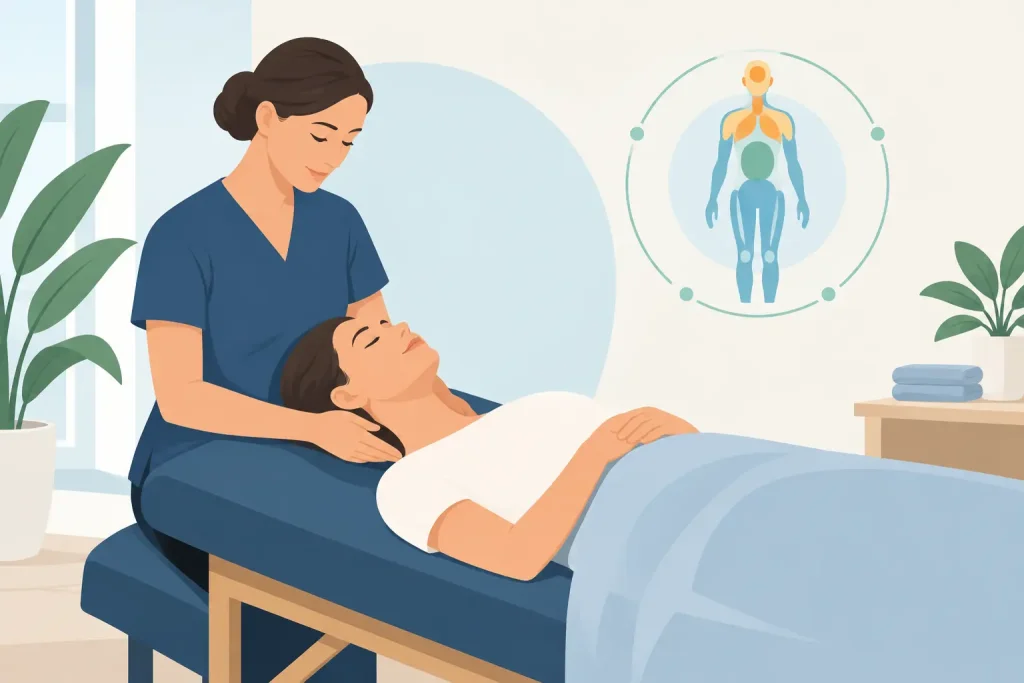
For musculoskeletal discomfort, gentle and specific chiropractic care may support improved mobility and reduced tension. At Alchemy Chiropractic, care is approached through the Zone Technique, which considers how the body’s glandular, elimination, nervous, digestive, muscular, and circulatory systems work together. The goal is not simply to chase a painful spot, but to support greater balance throughout the body.
9. What can I safely do at home between appointments?
Ask for guidance that fits your condition. Depending on your symptoms, a provider may suggest relative rest, gentle movement, changes to your workstation or sleep position, ice or heat, or temporary limits on lifting and exercise. The details matter. What helps a mild muscle strain may not be right for a concussion concern or a more serious injury.
Avoid using pain relief as a reason to immediately return to strenuous activity. Feeling better for a few hours and being ready for full activity are not always the same thing.
10. What should I document for my records and insurance claim?
Keep a simple, organized record from the beginning. Save the police report, photographs, insurance information, repair estimates, medical records, appointment dates, receipts, work absence notes, and a daily symptom journal. Record how discomfort affects practical parts of your life, such as driving, sleep, household tasks, caregiving, and work.
For legal or insurance questions, consider speaking with your insurer or a qualified attorney. Your healthcare team can document your clinical care, but they cannot provide legal advice.
11. How will we know whether I am improving?
Healing is easier to recognize when you define what progress means. Pain levels matter, but they are only one measure. You may also look at range of motion, sleep quality, headaches, ability to work, comfort while driving, energy, and confidence in daily movement.
Ask when you should expect a follow-up, what changes are encouraging, and which changes should prompt a call sooner. A thoughtful care plan should adapt as your body responds.
12. What happens if I do nothing?
This question is not meant to create fear. Some minor soreness resolves with time, rest, and sensible self-care. But persistent pain, reduced motion, recurring headaches, or ongoing tension can change how you move and how you feel each day. Waiting may allow the body to build compensations that are harder to unwind.
If symptoms linger, interfere with life, or worsen, seek an evaluation. Listening early is one of the kindest things you can do for your future self.
Give your body room to heal
After an accident, it can be tempting to focus on the car, the schedule disruption, and the paperwork while placing your own needs last. Your body has carried you through a sudden force and may need time, guidance, and gentle support to regain its rhythm.
Ask questions, pay attention to changes, and choose care that sees more than a single symptom. Healing is rarely about forcing the body forward. It is about creating the conditions for balance, movement, and trust in your body to return, one supported step at a time.