

A stiff neck when you check your blind spot, a low back that protests after sitting through meetings, or hips that feel tight on a favorite walk can make your whole day feel smaller. Understanding how gentle chiropractic supports mobility begins with seeing movement as more than flexibility. Comfortable motion depends on how your joints, muscles, nervous system, posture, and daily habits work together.
Gentle chiropractic care is designed to meet the body where it is. Rather than forcing a range of motion, a specific adjustment and thoughtful care plan can help address areas of restriction, tension, and imbalance that may be changing the way you move. For many people, that means feeling more at ease turning, bending, reaching, walking, or returning to the activities that make them feel like themselves.
How Gentle Chiropractic Supports Mobility in Daily Life
Mobility is your ability to move with control and comfort. It shows up in ordinary moments: lifting a child, getting out of the car, carrying groceries, reaching overhead, or sitting at your desk without constantly shifting positions. When movement feels limited, the source is not always located exactly where you feel discomfort.
For example, a person with recurring shoulder tightness may also be compensating through the neck, upper back, or rib area. Someone with low-back tension may be moving differently because of hip stiffness, old injury patterns, prolonged sitting, or protective muscle guarding. The body is remarkably adaptable, but compensation can become exhausting when it continues for weeks, months, or years.
A gentle chiropractic approach looks for these patterns. Care is not simply about chasing the loudest symptom. It is about helping the body reconnect with a more balanced, coordinated way of moving. When joints move more freely and surrounding tissues are less guarded, everyday movement may require less effort.
Gentle does not mean vague
Gentle adjustments are still precise. The goal is not to apply the most force possible. It is to use an approach appropriate for your body, your health history, and what is found during your examination. Some people appreciate gentle care because they are sensitive to forceful techniques, have been living with persistent tension, are recovering after an auto injury, or simply want a calmer experience.
The right technique depends on the person. A recreational runner, a parent recovering from the physical demands of pregnancy and childcare, and an office professional with recurring headaches may all have different mobility needs. Personalized care respects those differences rather than placing everyone into the same treatment routine.
The Connection Between Alignment, Tension, and Movement
The spine does much more than support an upright posture. It helps coordinate movement throughout the body and protects the nervous system, which carries information between the brain and body. When certain areas are restricted or under stress, the body can respond with tightness, altered movement patterns, or discomfort.
Chiropractic adjustments aim to support healthy joint motion and nervous system communication. This does not mean every ache has one simple cause, and it does not mean an adjustment alone replaces sleep, strength, nourishment, or medical care when needed. Mobility is shaped by many factors. Still, restoring motion where the body has become restricted can be a meaningful part of a broader healing plan.
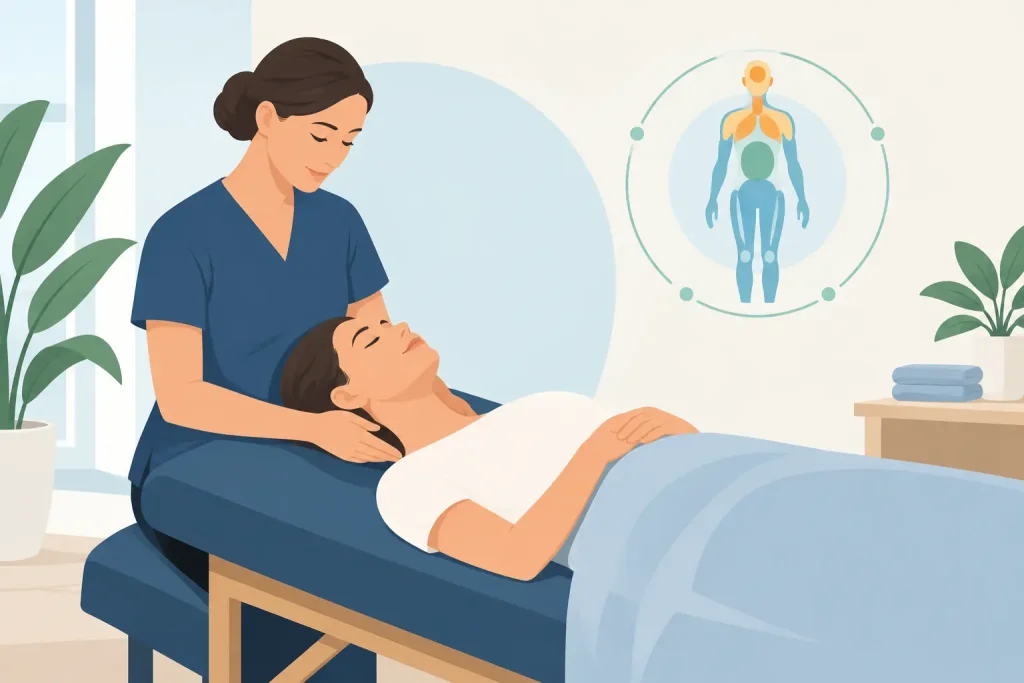
At Alchemy Chiropractic, care is informed by the Zone Technique, a whole-body approach centered on six healing zones: glandular, elimination, nervous, digestive, muscular, and circulatory. This framework recognizes that a person’s experience of movement, energy, and tension can be influenced by more than one body system. The focus remains on specific, individualized adjustments that support balance and the body’s natural healing capacity.
Why the nervous system matters
Your nervous system helps coordinate muscle activity, joint position, and the signals that tell you when something feels safe or threatening. After stress, repetitive strain, or an injury, the body may stay in a protective pattern. Muscles can remain tight, motion can feel guarded, and even simple movements may begin to feel uncertain.
Gentle chiropractic care may help reduce some of that protective tension by supporting joint movement and a calmer, more organized response from the body. Patients often describe the result in practical terms: they can turn their head more easily, stand longer, move with less hesitation, or sleep more comfortably.
Those changes are personal, not guaranteed, and they often develop over time. A mobility concern that has been building for years may need more than one visit, along with supportive movement habits and patience. Meaningful progress is often measured in the small moments that return first.
What a Mobility-Focused Visit Can Look Like
A thoughtful chiropractic visit begins with listening. Your provider may ask when you notice stiffness, what movements feel limited, whether there was an accident or a recent change in activity, and how the issue affects work, family life, exercise, or sleep. These details matter because they help reveal the pattern behind the complaint.
An examination can assess posture, areas of tenderness, joint motion, and the ways your body moves as a whole. From there, your chiropractor can recommend a care plan tailored to your needs. That plan may include gentle adjustments, guidance around posture or movement, and recommendations for when additional evaluation is appropriate.
For someone recovering from an automotive injury, care may need to begin especially carefully. Symptoms can change after the initial shock of an accident, and stiffness or headaches may emerge later. For active adults, the goal may be to support a return to training without ignoring the signals their body is sending. For children, care should be adapted to their stage of development and individual needs.
The most helpful plan is one that gives you a clear understanding of what is being addressed and why. You deserve to feel heard, informed, and comfortable throughout the process.
Supporting Mobility Between Visits
Adjustments can be one valuable part of caring for mobility, but your day-to-day choices matter, too. You do not need an intense fitness routine to support better movement. Consistent, comfortable motion is often more useful than doing too much after weeks of inactivity.
Try to change positions regularly if you work at a desk or drive often. A brief walk, gentle neck and shoulder movement, or standing break can interrupt the stiffness that comes from staying in one position too long. If you are returning to exercise after pain or injury, build gradually. Pushing through sharp pain or significant worsening is different from the normal effort of rebuilding strength.
Sleep, hydration, stress, and recovery time also influence how your body feels. When life is demanding, the body may hold more tension and have fewer resources for recovery. A whole-body perspective makes room for these realities without asking you to do everything perfectly.
When Mobility Changes Need More Attention
Not every mobility issue should be managed with chiropractic care alone. New or severe symptoms, significant weakness, numbness that is worsening, loss of coordination, fever, unexplained weight loss, or changes in bowel or bladder function require prompt medical evaluation. After a serious fall, accident, or injury, it is also wise to seek appropriate assessment before resuming normal activity.
For common stiffness, recurring tension, and movement restrictions, gentle chiropractic care can be a supportive option. The key is an individualized approach that considers your history, your goals, and how your body responds over time. Care should feel collaborative, never rushed or one-size-fits-all.
Better mobility is not only about touching your toes or adding another workout to your schedule. It is about having the freedom to move through your own life with more comfort, confidence, and connection to your body. If stiffness or tension has been quietly limiting your days, a gentle, personalized conversation about what your body needs can be a meaningful place to begin.