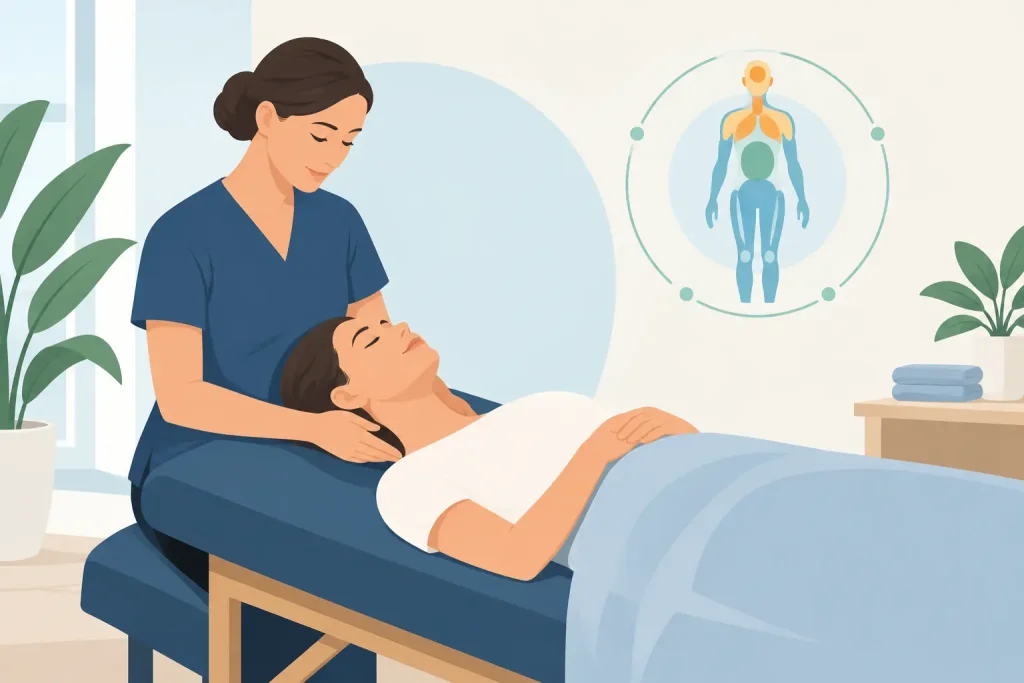


If the idea of chiropractic care makes you picture forceful twisting or loud cracking, you are not alone. Many people who would benefit from care put it off because they assume every visit feels intense. In reality, gentle chiropractic adjustment methods are designed to work with the body, not against it. For many patients, that means a calmer experience, more precise care, and a better path toward lasting relief.
The right approach depends on the person in front of the chiropractor. A runner with recurring hip tension, a parent dealing with headaches and poor sleep, and someone healing after a car accident may all need different kinds of support. What they often have in common is this – they want care that feels safe, thoughtful, and effective.
What gentle chiropractic adjustment methods really mean
A gentle adjustment is not simply a lighter version of traditional chiropractic care. It is a specific way of assessing and correcting imbalance with as little force as needed. The goal is still to restore motion, reduce stress in the nervous system, and help the body function better, but the delivery is more refined.
That matters because healing is not only about moving a joint. It is also about how the body receives that input. When an adjustment is specific and well matched to the patient, the body can respond without unnecessary guarding or tension. Patients often describe this kind of care as relieving, settling, or surprisingly comfortable.
Gentle methods can be especially appealing for people who are new to chiropractic, sensitive to touch, recovering from injury, or simply prefer a less forceful approach. They are also commonly used for children, older adults, and patients with chronic tension patterns where the body has been compensating for a long time.
Why a gentler approach can still be powerful
There is a common misunderstanding that stronger treatment must produce stronger results. In practice, that is not always true. The body does not need excessive force to begin changing. It needs accurate input.
When the spine, muscles, and nervous system are under stress, the body often starts protecting itself. That can show up as stiffness, inflammation, shallow breathing, headaches, digestive upset, fatigue, or persistent pain that never seems fully resolved. A gentle adjustment aims to interrupt that stress pattern and encourage a more balanced response.
This is one reason many patients notice benefits that go beyond the area that hurts. When the body starts functioning with less interference, people may report better sleep, clearer focus, easier movement, and improved energy. It is not magic. It is what can happen when the brain and body communicate more clearly.
Types of gentle chiropractic adjustment methods
There is more than one way to deliver low-force chiropractic care. Some chiropractors use handheld instruments that create a quick, precise impulse without requiring manual twisting. Others use positioning techniques that allow the body to relax into correction. Some use light touch and targeted contact points to influence tension patterns and spinal balance.
At a whole-body practice, the adjustment may also be guided by broader patterns in the body rather than by pain location alone. For example, a person with neck pain may also be dealing with digestive stress, muscular compensation, or nervous system overload. In that case, a gentle method can be part of a more complete strategy to help the body regain harmony.
This is where a personalized approach matters. Two patients with similar symptoms may need very different care. One may respond best to instrument-assisted adjustments. Another may do better with gentle manual corrections and supportive follow-up visits. The method is important, but the match is what makes it effective.
Gentle chiropractic adjustment methods and whole-body healing
At Alchemy Chiropractic, chiropractic care is not treated as a routine series of the same adjustments for every person. The body is viewed as an integrated system, and healing starts by identifying where balance has been disrupted. This is one reason gentle care fits so naturally into a whole-body model.
Using the Zone Technique framework, care is centered around six healing zones of the body: glandular, elimination, nervous, digestive, muscular, and circulatory. When one or more of these zones are out of balance, symptoms can show up in ways that feel disconnected at first. A person may come in for low back pain but also struggle with low energy, headaches, or poor sleep.
A gentle, specific adjustment can help restore communication between the brain and body so those systems work together more efficiently. That does not mean every problem disappears overnight. It means the body is given a better chance to heal in the way it was designed to.
Who often benefits from a gentler style of care
Gentle methods can be appropriate for a wide range of people. Adults with busy schedules often appreciate that care feels supportive rather than draining. Athletes may want precise treatment that improves mobility without adding extra soreness. Parents looking for pediatric chiropractic care are usually drawn to techniques that feel calm, measured, and age-appropriate.
Patients recovering from auto injuries can also benefit from a gentler approach, especially when the body is already inflamed or guarded. After a collision, even minor ones, the nervous system can stay on high alert. In that state, precision matters. Too much force too soon can feel overwhelming, while a specific low-force adjustment may help the body begin unwinding tension more safely.
That said, gentle does not mean identical for everyone. Some people need slower pacing. Others improve quickly and can tolerate more direct correction. Good chiropractic care always includes that judgment call.
What to expect during care
For many patients, the biggest relief comes from finally being listened to. A thoughtful chiropractic visit should begin with understanding your health history, your current concerns, and how your body has been responding over time. That context helps shape the type of adjustment used.
During the adjustment itself, you may feel light pressure, a precise contact, or a quick assisted motion depending on the technique. Some visits include audible joint release, but many gentle methods do not. The effectiveness of the adjustment is not measured by sound. It is measured by how well it helps restore balance and function.
Afterward, some people feel immediate ease. Others notice more gradual changes over several visits as the body starts holding its corrections better. Both experiences can be normal. Healing is rarely linear, especially when stress patterns have been building for months or years.
When gentle methods are a better fit than traditional force
There are situations where a low-force approach makes particular sense. If someone feels anxious about chiropractic, has significant muscle guarding, is highly sensitive, or has a more complex health history, gentler methods may create more trust and a better response from the body.
They can also be a strong fit when care is meant to support broader wellness goals, not just symptom reduction. If the aim is to improve regulation, energy, sleep, and overall resilience, a precise and measured approach often aligns better with that philosophy than a one-size-fits-all adjustment style.
Still, there are trade-offs. Some patients prefer more traditional manual adjustments and respond well to them. Others want a combination of techniques over time. What matters most is not whether care looks dramatic. It is whether it is tailored, specific, and helping the body move toward lasting change.
Choosing a chiropractor for gentle care
If you are looking for gentle chiropractic adjustment methods, ask how the doctor evaluates the whole body, how they decide which technique to use, and how they adapt care for different ages and needs. The answers should feel clear and reassuring, not rushed or overly technical.
You also want a practice that sees more than a symptom on a chart. Pain can be the reason someone schedules a visit, but it is often only part of the story. When care is centered on balance, healing, and the body’s ability to restore itself, treatment tends to feel more personal and more meaningful.
That is often the difference patients notice right away. They do not just feel adjusted. They feel understood.
A gentle approach can be a powerful beginning for people who want less pain, better movement, and a body that feels more like home again. Sometimes healing starts not with force, but with the right kind of precision at the right time.