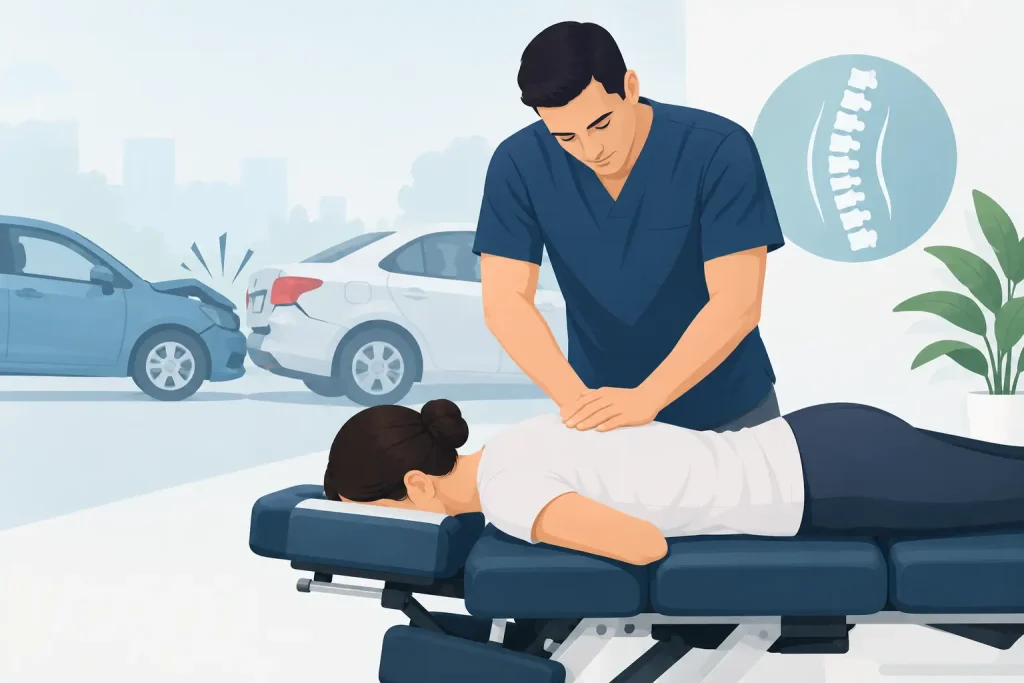


A collision can be over in seconds, yet your body may continue responding for days or weeks. You might walk away feeling shaken but mostly fine, then notice neck stiffness at your desk, headaches by evening, low back pain when you get out of bed, or a new tension across your shoulders. Understanding how chiropractors evaluate auto injuries can make the next step feel less uncertain.
A thoughtful evaluation is not simply about locating the place that hurts most. It is about listening to your experience, checking how your body moves and functions, and looking for patterns that may have been created by the force of the accident. At Alchemy Chiropractic, this process is approached with care, precision, and respect for the fact that healing after a crash is rarely one-size-fits-all.
Why Auto Injuries Need a Careful Evaluation
Even a low-speed accident can place significant stress on the body. When a vehicle stops suddenly, the head, neck, spine, hips, and soft tissues may move in ways they were not designed to move. Muscles can tighten protectively. Joints can become irritated. The nervous system may stay on high alert long after the immediate danger has passed.
Pain does not always tell the full story right away. Adrenaline and stress can temporarily mask discomfort, while inflammation and muscle guarding may build gradually. This is one reason it can help to be evaluated soon after an accident, even if symptoms seem minor at first.
At the same time, chiropractic care is not a substitute for emergency medical care. Severe headache, loss of consciousness, worsening confusion, chest pain, trouble breathing, new weakness, numbness that is spreading, loss of bowel or bladder control, or obvious fracture concerns need urgent medical attention. A responsible chiropractor recognizes these red flags and refers patients for the appropriate evaluation when needed.
How Chiropractors Evaluate Auto Injuries at Your First Visit
The first visit usually begins with a conversation, because the details of the crash matter. The direction of impact, where you were sitting, whether you were braced, if airbags deployed, and whether your head struck anything can all offer useful context. A rear-end collision may create a different strain pattern than a side-impact accident, for example.
Your chiropractor will also ask about symptoms that can affect daily life: neck or back pain, headaches, dizziness, shoulder tension, jaw discomfort, tingling, numbness, sleep disruption, fatigue, or difficulty concentrating. It is helpful to mention changes that may not seem directly related to your spine. After an accident, a patient may notice that they are more irritable, have less energy, or cannot comfortably turn to check traffic while driving.
This conversation is also a chance to discuss your health history, current medications, prior injuries, and any care you have already received. A past sports injury, previous concussion, or longstanding low back issue may influence how your body responds to a new event.
Looking at Movement, Posture, and Tender Areas
After reviewing your history, the chiropractor may observe how you stand, sit, walk, and move. They may check whether one shoulder or hip appears to be working harder than the other, whether your head is carried forward, or whether you are protecting one side of your body.
Gentle range-of-motion testing can reveal where movement feels restricted or painful. You may be asked to turn your head, bend, rotate your torso, lift an arm, or move through simple motions that reflect everyday activities. The goal is not to push through pain. It is to understand where the body has lost ease, mobility, or confidence.
Palpation, or careful hands-on assessment, may help identify muscle tightness, tenderness, swelling, joint restriction, or areas that feel unusually guarded. An injury can create compensation patterns. A sore neck, for instance, may lead someone to tense their shoulders, change their posture, and eventually feel discomfort through the upper back or low back as well.
Checking Nerve Function and Safety Indicators
Because the nervous system coordinates communication throughout the body, an auto injury evaluation may include basic neurological checks. Depending on your symptoms, this can involve testing sensation, reflexes, strength, coordination, or whether pain travels into an arm or leg.
These checks help the chiropractor understand whether a nerve may be irritated and whether your symptoms call for additional imaging, medical collaboration, or a different level of care. Not every patient needs X-rays or advanced imaging. It depends on the accident, the exam findings, your health history, and the presence of red flags.
A good evaluation is not about assuming the same answer for every person with whiplash or back pain. It is about determining what is appropriate for your specific body and circumstances.
Seeing the Body as a Connected System
After a collision, it is easy to focus only on the painful area. Yet the body works as an interconnected whole. A tense neck can affect shoulder movement. Guarded low back muscles can change how you walk. Interrupted sleep can make pain feel more intense and slow your sense of recovery.
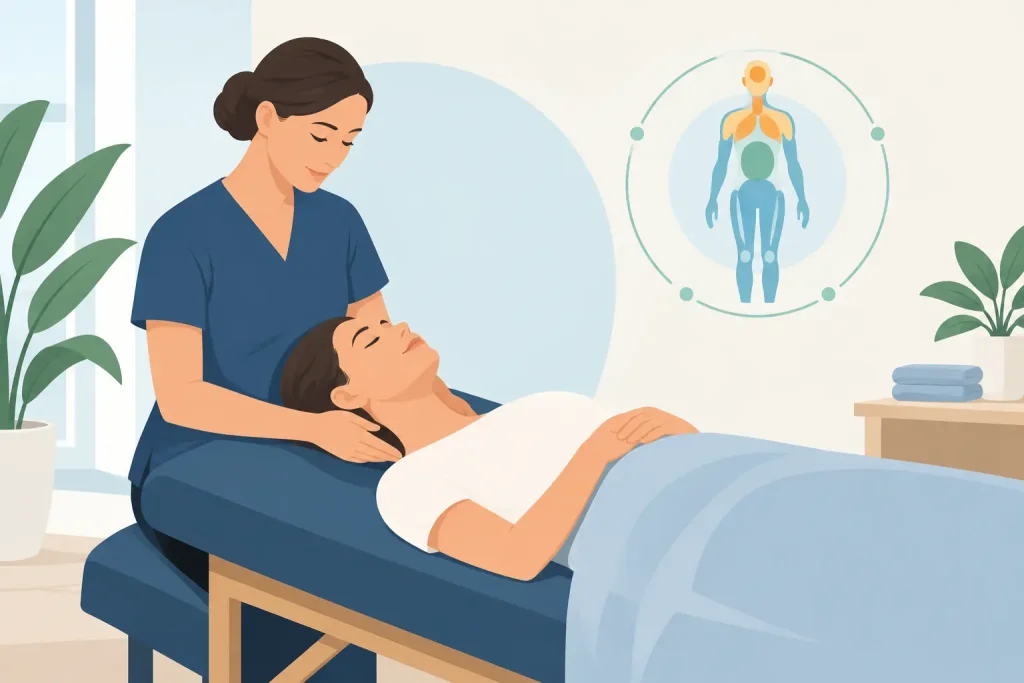
At Alchemy Chiropractic, care is informed by the Zone Technique, a whole-body approach that considers six healing zones: glandular, elimination, nervous, digestive, muscular, and circulatory. This perspective does not ignore the physical effects of an accident. Instead, it recognizes that injury-related stress can influence how balanced and supported you feel throughout your body.
For one patient, the muscular zone may be the clearest place to begin because of tightness, soreness, and reduced mobility. For another, nervous system stress, headaches, poor sleep, or digestive disruption may be part of the picture. Your evaluation helps shape a personalized path rather than a routine adjustment plan.
Turning Findings Into a Personalized Care Plan
Once the evaluation is complete, your chiropractor should explain what they found in clear language. You deserve to understand which areas appear stressed, what may be contributing to your symptoms, and what type of care is being recommended.
A chiropractic care plan after an auto injury may include gentle, specific adjustments intended to support spinal and nervous system function, along with guidance on activity, posture, hydration, rest, and home care. The pace of care depends on your condition. Some people need more frequent visits early on because pain and restriction are more active. Others may benefit from a slower approach, particularly if they are highly sensitive, anxious after the accident, or managing other health concerns.
There are trade-offs to consider. Returning to every activity too quickly may aggravate irritated tissues, but complete inactivity for too long can also contribute to stiffness and fear of movement. Your chiropractor can help you find a reasonable middle ground based on your symptoms and progress.
For auto injury cases, documentation is also an important part of care. Accurate records of your symptoms, exam findings, treatment recommendations, and response to care can be useful when coordinating with other providers or navigating insurance questions. Be open about changes between visits, including new symptoms, improvements, and activities that make discomfort worse.
What You Can Do Before Your Appointment
You do not need to arrive with perfect notes, but a few details can help make your evaluation more complete. Write down the date of the accident, how it happened, when symptoms began, and what makes them better or worse. Bring any relevant accident information, medical records, imaging reports, or insurance details if you have them.
Most of all, do not minimize what you are feeling. A headache that keeps returning, a neck that will not rotate comfortably, or exhaustion that appeared after the crash is worth mentioning. Clear communication gives your chiropractor a more accurate picture of what your body needs.
Healing after an accident is not about forcing your body to “tough it out.” It is about giving it attentive support, allowing it to restore movement and harmony at a pace that feels safe. If a crash has changed the way you move, sleep, work, or feel in your body, a personalized evaluation can be a meaningful first step toward feeling like yourself again.