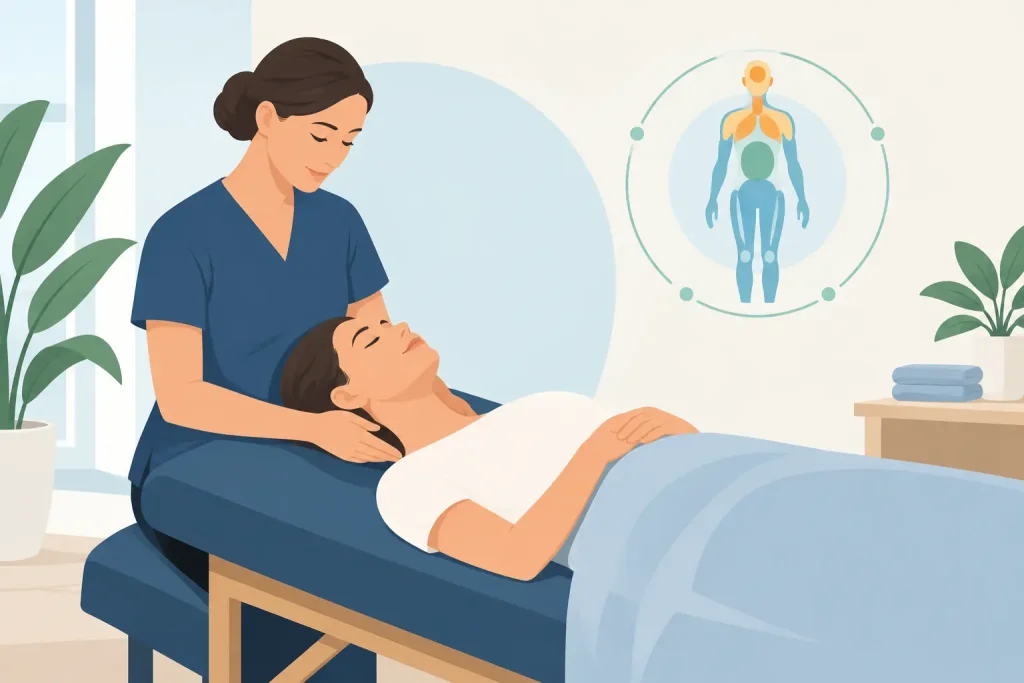


A stiff neck rarely stays just a stiff neck. For many people, it shows up alongside headaches, poor sleep, low energy, jaw tension, digestive changes, or a general sense that the body is working harder than it should. That is why a whole body chiropractic approach matters. Instead of chasing one symptom at a time, it looks at how the body is communicating as a connected system.
This can be a relief for people who have tried stretching, massage, rest, or occasional adjustments and still feel like something is off. When care only focuses on the spot that hurts, it can miss the deeper pattern behind the problem. A more complete approach asks a better question – not just where do you hurt, but what is out of balance in the body as a whole?
What a whole body chiropractic approach really means
Many people hear the word chiropractic and think only of the spine. The spine is certainly important, but a whole body chiropractic approach goes further. It recognizes that the brain and body are constantly exchanging information, and when that communication is stressed, the effects can show up in many different ways.
Pain is one signal, but it is not the only one. Fatigue, tension, disrupted sleep, poor recovery, irritability, digestive discomfort, and recurring headaches can all reflect a body that is not adapting well. In that sense, the goal of care is not simply to make a painful area feel better for a few days. The goal is to help restore balance so the body can function more smoothly and heal more naturally.
This is one reason whole-body care often feels different from quick, routine treatment. It is more individualized. It pays attention to patterns. And it respects the idea that two people with the same symptom may need very different care.
Why symptom-based care often falls short
There is nothing wrong with wanting relief. If your back hurts, of course you want your back to stop hurting. But symptoms do not always tell the full story. Sometimes the area that feels the worst is compensating for stress somewhere else.
For example, tight shoulders may relate to nervous system overload, jaw tension, postural strain, or imbalance elsewhere in the body. Headaches may involve neck mechanics, but they can also be influenced by stress patterns, circulation, or muscular compensation. Low back pain may flare because the body is protecting itself after old injuries, poor movement habits, or internal stress.
This is where a whole body chiropractic approach can make more sense than a narrow one. It considers the body as an integrated system rather than a collection of isolated parts. That does not mean every problem has one simple root cause. Often, there are layers. But looking broadly makes it easier to understand why a symptom keeps returning and what the body may need in order to settle and recover.
The role of balance in healing
Healing is not just about structure. It is also about regulation. When the body is balanced, it tends to move better, rest better, and respond to stress more effectively. When it is out of balance, even small stressors can feel magnified.
At Alchemy Chiropractic, this perspective is reflected in the Zone Technique, which looks at six healing zones of the body: glandular, elimination, nervous, digestive, muscular, and circulatory. Rather than seeing health through one narrow lens, this model helps identify where the body may be struggling to maintain harmony.
That matters because the body does not compartmentalize the way we often do. If the nervous system is overwhelmed, muscles may tighten. If digestion is off, energy may dip. If circulation is sluggish, recovery may feel slow. A gentle, specific adjustment aimed at restoring better brain-body communication can support much more than temporary pain relief.
How this approach feels in real life
Most patients are not looking for theory. They want to know what changes they might actually notice. A whole body chiropractic approach often shows up in practical ways.
Some people come in for neck or back discomfort and realize they are also sleeping more deeply. Others notice fewer headaches, less jaw tension, better mobility, or more steady energy through the day. Parents may seek care for a child with one concern and find that overall regulation improves. Someone recovering from an auto injury may not only want pain relief but also help calming the body after the stress of trauma.
This is the value of care that looks beyond the obvious complaint. The body often gives signs of improvement in more than one area at a time.
That said, healing is rarely perfectly linear. Some people feel a shift quickly. Others improve more gradually, especially if they have been dealing with stress or discomfort for a long time. The right pace depends on the person, their history, and how their body has been compensating.
Who benefits from a whole body chiropractic approach
This kind of care can be helpful for adults who feel worn down by recurring tension, pain, headaches, TMJ issues, postural strain, or low energy. It can also be a good fit for active people who want to move and recover better, not just get through the next week.
Families often appreciate it because it supports the idea that health is not one-size-fits-all. Pediatric care, for example, should be gentle, specific, and responsive to a child’s needs. Post-accident care should be thoughtful about both structural stress and nervous system stress. Even within the same household, the care plan may look different for each person.
That is a strength, not a limitation. Personalized care acknowledges that bodies heal differently.
What makes gentle, specific care so effective
A common misconception is that stronger treatment gets stronger results. In reality, precision often matters more than force. When the body is already stressed, overwhelmed, or guarding, a gentle and specific adjustment can be exactly what helps it shift.
This is especially important for people who feel nervous about chiropractic care, for children, and for patients recovering from injury. The goal is not to overpower the body. The goal is to work with it.
A whole body chiropractic approach tends to value that precision because it is not just trying to create a loud response. It is trying to create the right response. When care is tailored to what the body actually needs, it can feel calmer, more grounded, and more sustainable over time.
Why personalization matters more than routines
Some chiropractic experiences feel very standardized. The same steps happen at every visit, regardless of what has changed. While consistency has value, routine care can miss important shifts in how a person is functioning.
Personalized care pays attention to those shifts. It considers how stress, sleep, movement, injury history, and day-to-day life may be affecting the body right now. It allows the care plan to reflect the person, not just the appointment slot.
That is especially meaningful for patients who have felt dismissed elsewhere or told that recurring discomfort is just something they have to live with. Being heard matters. Being assessed as a whole person matters. And when care is rooted in that level of attention, the results often feel more complete.
Choosing care that supports the whole person
If you have been living with pain, tension, fatigue, or a sense that your body is not fully in sync, it may be time to look beyond symptom management alone. A whole body chiropractic approach offers a more connected view of health, one that honors the body’s built-in ability to heal when communication and balance are restored.
That does not promise a one-visit fix, and it should not. Good care is thoughtful. It responds to what your body is showing, not what a generic checklist assumes. But when the right areas are addressed with clarity and intention, people often feel something they have been missing for a long time – not just less pain, but more ease.
Sometimes healing begins the moment your body is finally treated like the intelligent, interconnected system it has been all along.