

A chiropractic visit should not feel like a one-size-fits-all routine. When comparing specific adjustments vs full spine manipulation, the most meaningful question is not which approach sounds more comprehensive. It is which approach matches your body, your symptoms, your health history, and the outcome you hope to feel in daily life.
Some people arrive seeking relief after an auto injury, a long stretch of desk work, recurring headaches, or a stubborn ache that has started to affect sleep and energy. Others simply know they feel off balance. In either case, thoughtful chiropractic care begins with listening, assessing, and choosing an approach with purpose.
What Is a Specific Chiropractic Adjustment?
A specific adjustment is a targeted chiropractic contact applied to an area that has been identified through an examination. The practitioner is not working through a predetermined sequence or adjusting every part of the spine simply because it is there. Instead, they assess how the body is functioning and direct care toward the areas that appear most connected to the patient’s current needs.
The adjustment itself may be delivered by hand or with a gentle instrument, depending on the technique, the patient’s comfort, and the clinical situation. It does not always involve a popping sound. For many people, specificity and gentleness are especially reassuring when they are new to chiropractic, recovering from an injury, sensitive to forceful movement, or seeking care for a child.
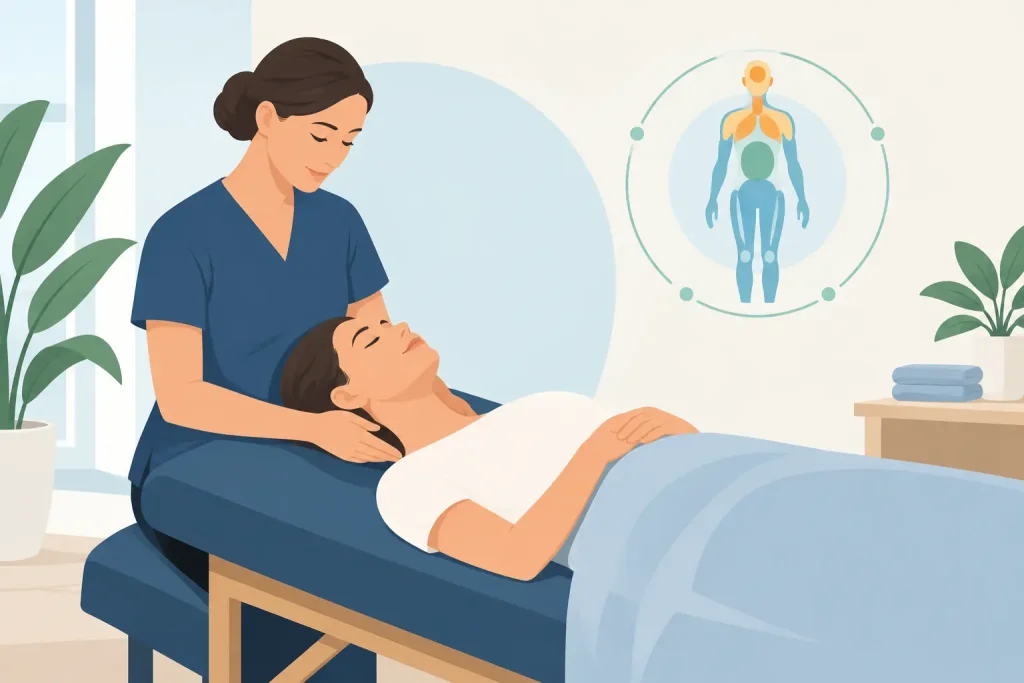
At Alchemy Chiropractic, this personalized perspective is central to care. The Zone Technique considers the relationship between the spine, brain, and six healing zones: glandular, elimination, nervous, digestive, muscular, and circulatory. The goal is not to chase one painful spot. It is to identify where the body may need support so it can move toward greater balance and harmony.
Why precision can matter
Pain is real, but pain is not always a complete map of what needs attention. A tight neck may be related to muscular strain, posture, stress, jaw tension, or compensation elsewhere in the body. Low back discomfort may be influenced by the way someone moves, sits, recovers from an old injury, or carries daily demands.
A specific approach gives the chiropractor room to respond to those individual patterns. It also makes care easier to adapt from visit to visit. If your body is responding well, the plan can evolve. If an area is tender after a collision or unusually reactive, the approach can be modified rather than pushed through.
What Does Full Spine Manipulation Mean?
“Full spine manipulation” is a broad phrase, not one universally defined procedure. People often use it to describe a visit in which multiple areas of the spine are adjusted, sometimes following a familiar sequence from the neck through the lower back. In some practices, it may mean a general spinal adjustment intended to address mobility across several regions during the same appointment.
This can be appropriate for some patients. Someone with widespread stiffness, multiple areas of restricted movement, or a history that supports broader care may benefit from having more than one spinal region addressed. A chiropractor may also determine that several areas are relevant after a thorough examination.
Still, a whole-spine approach should never mean automatic care. More adjustments do not necessarily mean better results. The value comes from clinical judgment, clear communication, and a treatment plan that accounts for your goals and how your body responds.
The trade-off: breadth versus focus
The difference between specific adjustments and a broader full-spine approach is often one of focus. Specific care prioritizes the most relevant findings at that moment. Broader care may address several regions when the assessment supports it.
Neither label alone tells you whether care will be gentle, effective, or right for you. A skilled chiropractor can use a focused approach while considering the entire body. Likewise, an appointment involving multiple regions can still be highly individualized. What matters is whether there is a reason for each decision and whether you understand that reason.
Specific Adjustments vs Full Spine Manipulation: What Patients Often Feel
Patient experience varies widely. After a specific adjustment, some people describe a sense of ease in one area, easier movement, less tension, or a calmer overall feeling. Others notice changes gradually over a series of visits. The body’s response is personal, and lasting improvement often depends on the nature of the concern, daily habits, stress, activity level, and time.
After care involving multiple spinal regions, patients may feel more generally mobile or less stiff. Some may prefer the feeling of broader care, while others find that a more focused and gentle approach feels better suited to their nervous system and comfort level.
Neither experience should be treated as a test of whether chiropractic is “working.” A loud release, an immediate sensation, or a dramatic first visit is not the goal. Meaningful care is about progress you can live with: turning your head more comfortably, returning to an activity, sleeping with less interruption, feeling steadier after a long workday, or moving through life with more confidence.
How a Personalized Decision Is Made
The right approach begins before an adjustment. Your chiropractor should ask about your main concerns, when they began, what makes them better or worse, previous injuries, medications, relevant diagnoses, and your goals for care. They should also perform an examination and explain their findings in understandable language.
For a patient after an auto accident, care may need to be especially cautious. Symptoms can evolve after a collision, and a sore neck or back may require a different plan than routine wellness care. For a child, technique and pressure should be age-appropriate and guided by a pediatric intake process. For an active adult with recurring tightness, the conversation may include training, recovery, ergonomics, and movement patterns.
There are also times when chiropractic adjustment may not be the first or only step. New or severe symptoms, unexplained weakness, numbness, changes in bowel or bladder control, significant trauma, fever, or a sudden severe headache deserve prompt medical evaluation. A responsible provider recognizes when referral or co-management is needed.
Questions Worth Asking Before Your First Visit
You do not need to know chiropractic terminology to advocate for your care. You can ask what the chiropractor found, why a particular area is being adjusted, and what type of technique they recommend. Ask whether the plan is expected to be gentle, what you might feel afterward, and how progress will be measured.
It is also reasonable to share your preferences. If you are nervous about neck adjustments, have had a difficult prior experience, or prefer low-force care, say so. Your comfort matters. Good chiropractic care is collaborative, and you should never feel pressured into an approach that has not been explained or that does not feel right for you.
Looking Beyond the Adjustment
An adjustment can be a valuable part of care, but it is not the entire healing process. The body responds best when treatment is paired with attention to the factors that shape how you feel between visits. That may include rest, hydration, comfortable movement, posture changes, recovery after physical activity, and realistic stress support.
For someone seeking whole-body wellness, this is where a zone-based approach can feel different from a routine appointment. The intention is not merely to create movement in the spine. It is to support the communication between the brain and body while honoring the systems that influence energy, digestion, circulation, muscle tension, and resilience.
The best choice between specific adjustments and full spine manipulation is rarely a permanent category. Your needs can change as your body heals, your activity changes, or new concerns arise. Choose a chiropractor who takes the time to assess, explain, and adjust the plan with you. When care feels thoughtful, gentle, and personal, you can focus less on the name of the technique and more on how supported you feel in your healing.